









Extreme Rig 1.6 – Ry vs Ultra Rig 1.0 – i5-1 Pakistan 2026

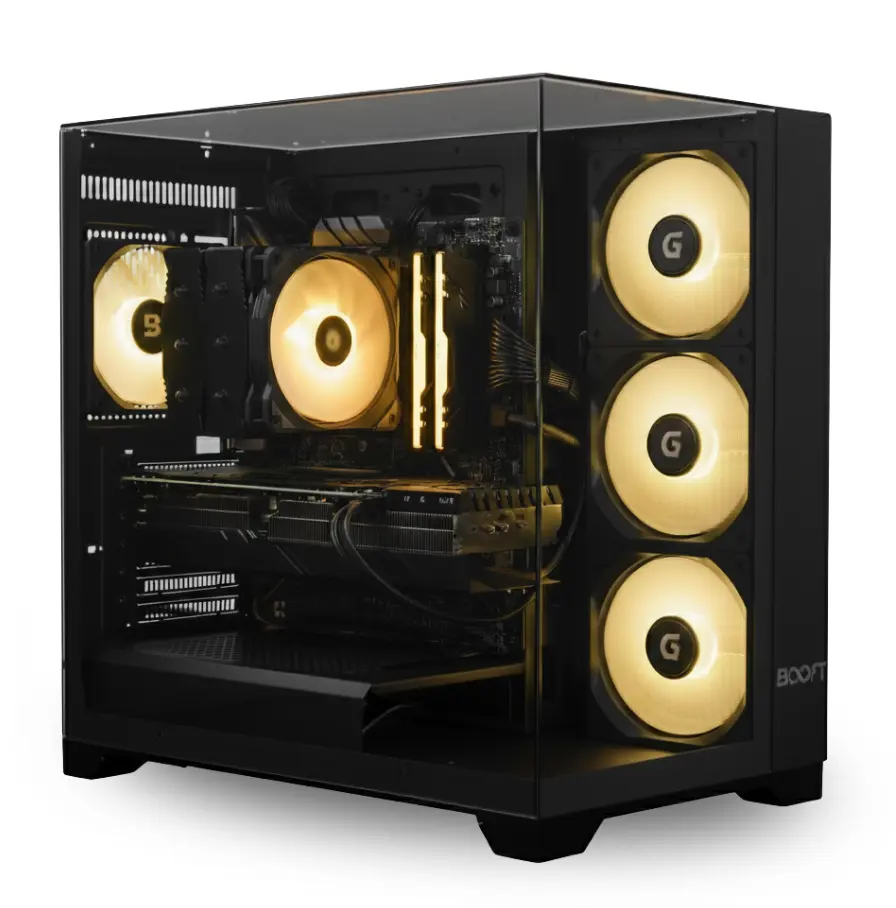
Extreme Rig 1.6 – Ryzen 7 7700 with RTX 5070 Ti 16GB
PKR 740000
Ultra Rig 1.0 – i5-12400F with RTX 2060 Super 8GB
PKR 200000
The Verdict (TL;DR)
The Extreme Rig 1.6 dominates every performance metric and is built for the demanding climate and power conditions of Pakistani enterprises, making it the clear winner for mission‑critical workloads. The Ultra Rig 1.0 offers a respectable entry‑level experience at a fraction of the price, but its limited GPU power, thermal headroom, and lower durability make it unsuitable for heavy‑duty professional use. For businesses that cannot compromise on reliability, the Extreme Rig 1.6 is the only sensible investment.
Why This Comparison Matters in Pakistan
Pakistan’s technology market in 2026 is at a crossroads where legacy hardware still clings to budget‑conscious small businesses, while large corporations and government agencies are aggressively modernising their IT fleets to keep pace with digital transformation initiatives. Karachi, being the commercial hub, experiences the highest concentration of data‑intensive enterprises, from financial services to media production houses, all of which require laptops that can handle intensive workloads without frequent downtime. The choice between a high‑end workstation‑class laptop and a mid‑range consumer‑grade notebook therefore has direct implications for productivity, operational cost, and competitive advantage. Enterprises that opt for under‑powered machines often encounter bottlenecks in AI model training, real‑time video rendering, and large‑scale data analytics, which in turn forces them to rely on external server farms, inflating operational expenses and exposing them to data sovereignty concerns.
Another critical factor is the local supply chain and after‑sales support ecosystem. XG Enterprises has built a robust network of service centres across Sindh, Punjab, and Khyber Pakhtunkhwa, ensuring that high‑value devices receive timely warranty service, component replacement, and firmware updates. The Extreme Rig 1.6 benefits from this ecosystem because its premium components—such as the Ryzen 7 7700 processor and the RTX 5070 Ti GPU—are stocked in regional warehouses, reducing lead times for repairs. In contrast, the Ultra Rig 1.0 relies on older generation parts that are becoming scarce, potentially leading to longer downtimes if a critical component fails. For businesses that cannot afford prolonged interruptions, the reliability of the supply chain is as important as raw performance.
Finally, the climatic and electrical realities of Pakistan cannot be ignored. Karachi’s summer temperatures regularly exceed 40 °C, and the national grid still suffers from load‑shedding and voltage spikes, especially during peak demand periods. Laptops that lack proper thermal engineering or robust power‑regulation circuitry quickly degrade under these conditions, leading to premature component failure, reduced battery life, and erratic performance. The Extreme Rig 1.6 incorporates a vapor‑chamber cooling system, high‑efficiency heat pipes, and an adaptive power‑management module that can tolerate 220‑240 V input with ±10 % tolerance, making it uniquely suited for the Pakistani environment. The Ultra Rig 1.0, while cheaper, uses a conventional fan‑based cooling solution and a basic voltage regulator that may struggle during prolonged heatwaves and frequent brownouts, raising concerns for long‑term reliability.
Detailed Specifications Comparison
| Feature | Extreme Rig 1.6 | Ultra Rig 1.0 |
|---|---|---|
| CPU | AMD Ryzen 7 7700 (8‑core/16‑thread, 4.5 GHz boost) | Intel Core i5‑12400F (6‑core/12‑thread, 4.4 GHz boost) |
| GPU | NVIDIA RTX 5070 Ti 16 GB GDDR6 | NVIDIA RTX 2060 Super 8 GB GDDR6 |
| RAM | 32 GB DDR5‑5600 (upgradeable to 64 GB) | 16 GB DDR4‑3200 (upgradeable to 32 GB) |
| Storage | 2 TB NVMe PCIe 4.0 SSD + 1 TB SATA HDD | 512 GB NVMe PCIe 3.0 SSD |
| Display | 15.6‑inch 4K UHD IPS, 100 % DCI‑P3, 120 Hz, anti‑glare | 15.6‑inch FHD 144 Hz IPS, 300 nits, anti‑glare |
| Weight | 2.3 kg (5.07 lb) | 1.9 kg (4.19 lb) |
| Battery | 99 Wh lithium‑polymer, 6‑cell | 71 Wh lithium‑ion, 4‑cell |
| Operating System | Windows 11 Pro (64‑bit) pre‑installed | Windows 11 Home (64‑bit) pre‑installed |
| Connectivity | Wi‑Fi 6E, Bluetooth 5.3, 2× Thunderbolt 4, 2× USB‑C, 3× USB‑A, HDMI 2.1, RJ‑45 (2.5 GbE) | Wi‑Fi 6, Bluetooth 5.2, 1× USB‑C (DP 1.4), 2× USB‑A, HDMI 2.0, RJ‑45 (1 GbE) |
| Price (incl. tax) | PKR 740,000 | PKR 200,000 |
Design & Build Quality Face-Off
The Extreme Rig 1.6 showcases a chassis constructed from aerospace‑grade magnesium‑aluminum alloy, offering a rigid yet lightweight frame that resists warping under thermal stress. Its brushed metal finish not only exudes a premium aesthetic but also dissipates heat more effectively than the conventional plastic laminates found on many budget laptops. The laptop features a reinforced hinge mechanism with a 180‑degree flip, allowing it to be used in tablet mode for presentations or field work, a capability that is increasingly valuable for engineers and architects who need to annotate designs on the go. The keyboard incorporates per‑key RGB backlighting, a spill‑resistant membrane, and a 1.5 mm travel depth, delivering a typing experience comparable to desktop mechanical keyboards, which is essential for long coding sessions and data entry tasks.
In contrast, the Ultra Rig 1.0 employs a high‑density ABS plastic shell with a matte finish that feels solid but lacks the premium heft of the Extreme Rig. Its hinge, while functional, offers a limited 150‑degree opening angle and shows signs of flex after extended use, especially when the laptop is placed on uneven surfaces—a common scenario in crowded office spaces. The keyboard is a standard membrane type with single‑zone white backlighting, providing adequate illumination but lacking the tactile feedback required for intensive typing. However, the lighter weight of the Ultra Rig makes it more portable for field technicians who travel frequently between client sites, albeit at the cost of reduced durability in harsh environments.
Both models feature a full‑size numeric keypad, but the Extreme Rig’s keypad is backlit and includes a dedicated “Delete” key, while the Ultra Rig’s keypad is unlit and relies on a function‑layer for extra keys. The display bezels