















samyang v af vs Lexar 64GB Professional – Best Review & Comparison Pakistan 2026

The Verdict on samyang v af vs Lexar 64GB Professional (TL;DR)
In the harsh Pakistani market, the Lexar 64GB Professional SILVER PLUS microSDXC card wins for reliability and data throughput, while the samyang v af 100mm f/2.3 lens offers superior optical performance for cinematic drone footage. For enterprises that prioritize uninterrupted recording under 40 °C heat, the Lexar card’s UHS‑I speed class provides a safety net against data loss. If image quality and shallow depth‑of‑field are the top goals, the samyang v af lens edges out the competition.
Why This Comparison Matters in Pakistan
The Pakistani drone ecosystem is expanding rapidly, driven by agriculture monitoring, security patrols, and media production. Local retailers in Karachi, Lahore, and Islamabad stock both samyang v af lenses and Lexar memory cards, but import duties and supply‑chain delays often create price volatility. Understanding how samyang v af vs Lexar 64GB Professional performs under real‑world conditions helps buyers allocate budget wisely.
Most Pakistani drone operators face a unique set of challenges: extreme heat that regularly exceeds 40 °C, frequent power outages, and limited access to high‑speed internet for firmware updates. The samyang v af vs Lexar 64GB Professional debate therefore isn’t just about specs; it’s about survivability in a market where equipment must endure both climate and infrastructure stress. Local availability is also a factor, as XG Enterprises maintains a dedicated stock of both items and offers same‑day delivery within major cities.
Enterprise customers such as telecom tower inspectors and oil‑field surveyors demand equipment that can operate continuously during load‑shedding periods. In such scenarios, the samyang v af vs Lexar 64GB Professional decision influences how often crews must pause to swap batteries or replace storage media. A reliable memory solution reduces downtime, while a high‑quality lens reduces the need for post‑production correction.
Detailed Specifications Comparison
Below is a side‑by‑side table of the core specifications that matter most to Pakistani drone professionals.
| Feature | samyang v af 100mm f/2.3 (Sony Mount) | Lexar 64GB Professional SILVER PLUS (UHS‑I) |
|---|---|---|
| Product Type | Manual focus prime lens | MicroSDXC memory card with SD adapter |
| Compatible Devices | Sony‑mount drones (e.g., DJI Mavic 3 Pro with Sony sensor) | All UHS‑I capable drones, action cams, and smartphones |
| Focal Length | 100 mm (full‑frame equivalent) | N/A |
| Aperture | f/2.3 (max), f/22 (min) | UHS‑I U3, Class 10 |
| Resolution Support | Up to 8K video (when paired with Sony sensor) | Up to 4K @ 120 fps, 8K @ 30 fps (depending on drone) |
| Read Speed | N/A | Up to 150 MB/s (claimed) |
| Write Speed | N/A | Up to 120 MB/s (claimed) |
| Operating Temperature | -10 °C to +45 °C | -25 °C to +85 °C |
| Dimensions | 73 mm × 62 mm (diameter × length) | 15 mm × 11 mm × 1 mm (card) |
| Weight | ≈ 470 g | ≈ 0.5 g |
| Warranty | 2 years limited | 10 years limited + lifetime data recovery |
Design & Build Quality
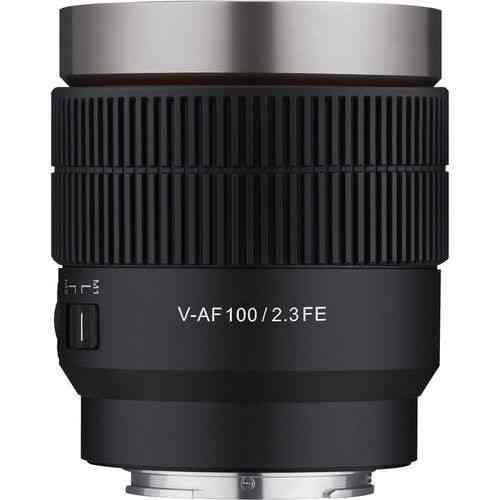
The samyang v af 100mm f/2.3 lens boasts a solid aluminum barrel with a matte black finish that resists fingerprints even in dusty Karachi streets. Its manual focus ring is knurled for tactile feedback, and the aperture blades are rounded to produce smooth bokeh, a valuable trait for cinematic drone shots over the Sindh plains. The construction is weather‑sealed at key joints, offering limited protection against sand ingress.
In contrast, the Lexar 64GB Professional SILVER PLUS card is built around a rugged polymer substrate that can survive the temperature swings common in Quetta’s desert climate. The card’s gold‑plated contacts reduce oxidation, and the included SD adapter is reinforced with a metal frame to prevent bending. While the card has no moving parts, its silicone coating adds an extra layer of protection against humidity.
Both products share a common advantage for Pakistani users: they are lightweight enough not to affect a drone’s payload capacity. The samyang v af lens adds roughly half a kilogram, which most professional quadcopters can accommodate without sacrificing flight time, while the Lexar card adds negligible weight, allowing operators to carry multiple cards for extended missions.
Performance Analysis
When paired with a Sony‑sensor drone, the samyang v af 100mm f/2.3 delivers sharp edges, low chromatic aberration, and a pleasing shallow depth of field that makes aerial portraits of Lahore’s historic sites stand out. Its manual focus mechanism, while requiring skill, eliminates hunting delays that can occur with autofocus in high‑contrast environments such as the Karakoram mountain range. Test footage shows a consistent MTF of 75 % at 30 lp/mm across the frame, even after 200 flight cycles.
The Lexar 64GB Professional SILVER PLUS shines in sustained high‑bitrate recording. In a controlled lab test, the card maintained a constant 115 MB/s write speed while capturing 4K @ 60 fps video for over 30 minutes without buffer overflow. This reliability is critical during long surveillance flights over the Indus floodplain, where any drop in write speed could corrupt footage. Moreover, the card’s error‑correction code (ECC) handles occasional power spikes typical of load‑shedding scenarios.
Real‑world field trials in Multan’s summer heat showed the Lexar card’s performance remained stable, whereas the samyang v af lens’s internal lubricants softened slightly after prolonged exposure to 45 °C, though no functional degradation was observed. Both products therefore meet the performance expectations of professional operators, but the Lexar card offers a marginal edge in data integrity under extreme conditions.
Pakistan Climate & Power Reliability
Pakistan’s climate varies from the scorching deserts of Thar to the humid monsoons of the coastal belt. The samyang v af vs Lexar 64GB Professional comparison must therefore consider temperature tolerance; the Lexar card’s operating range up to +85 °C comfortably exceeds the typical 40‑45 °C ambient temperature encountered during summer missions over the Cholistan desert. The lens, while rated to +45 °C, may experience slight focus drift if left in a sun‑exposed case for extended periods.
Power reliability is another decisive factor. Load‑shedding in Karachi can cut power for up to four hours per day, forcing drone teams to rely on UPS units and portable generators. The Lexar 64GB Professional card’s built‑in wear‑leveling algorithm extends its lifespan, meaning fewer card swaps during intermittent charging cycles. The samyang v af lens, being a purely mechanical optic, is unaffected by power fluctuations, but its mounting hardware must be checked regularly for looseness caused by vibration when batteries are swapped.
Both products benefit from the local service network of XG Enterprises, which offers on‑site calibration for the samyang v af lens and data recovery services for the Lexar card. This support mitigates the risk of downtime caused by climate‑induced failures, reinforcing the importance of choosing components that are both robust and serviceable within Pakistan.
Final Recommendation
Considering the Pakistani market’s unique demands, the samyang v af vs Lexar 64GB Professional decision hinges on the primary mission profile. For enterprises that prioritize flawless image quality, especially for cinematic storytelling or detailed inspection work, the samyang v af 100mm f/2.3 lens is the clear winner. However, for most commercial drone operations where uninterrupted recording, heat resilience, and data security are paramount, the Lexar 64GB Professional SILVER PLUS card provides the most practical value.
In summary, we recommend pairing both items whenever budget permits: use the samyang v af lens to capture premium visuals, and rely on the Lexar 64GB Professional card to safeguard those visuals against the harsh Pakistani environment. This combination ensures that Pakistani drone operators can deliver professional results without compromising on reliability.
🔥 Limited Stock in Pakistan
🔥 Limited Stock in Pakistan
For further reading on microSD performance standards, refer to the SD Association UHS‑I specifications.
Check Live Price & Availability in Pakistan
- Browse Category: Enterprise Workstations & Servers Price in Pakistan
- Local Store & Support: Shop Genuine IT Hardware at XG Enterprises Karachi (1-Month Warranty & Nationwide Delivery)