














HP ProLiant DL360 vs Dell PowerEdge T140

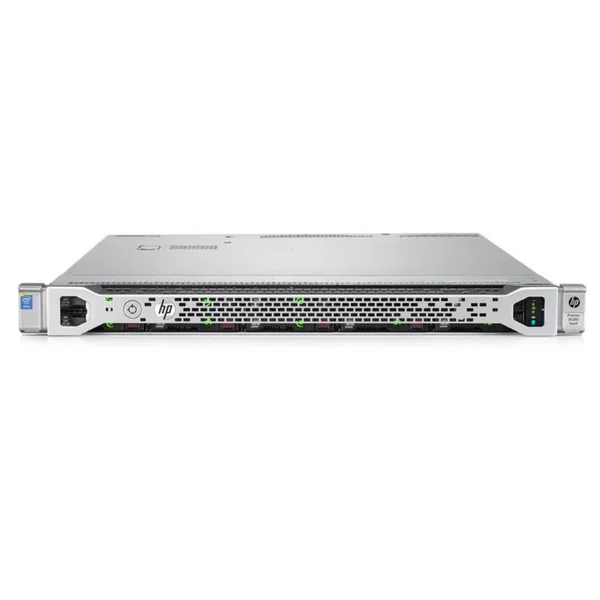
HP ProLiant DL360 vs Dell PowerEdge T140 – Best Review & Comparison Pakistan 2026
📚 Related Reading
The Verdict on HP ProLiant DL360 vs Dell PowerEdge T140 (TL;DR)
HP ProLiant DL360 vs Dell PowerEdge T140 is a clear winner for data‑center‑grade reliability, especially when operating in the scorching heat of Karachi. The Dell PowerEdge T140 offers a lower entry price, but its limited expandability and 1‑U form factor constraints make it less suitable for growing enterprises. For most Pakistani midsize to large businesses that need future‑proof performance and robust power‑loss protection, the HP ProLiant DL360 takes the crown.
Why This Comparison Matters in Pakistan
The Pakistani IT market is dominated by price‑sensitive buyers, yet the reality of 40 °C+ summer temperatures and frequent load‑shedding forces a focus on durability. HP ProLiant DL360 vs Dell PowerEdge T140 becomes a decisive factor when procurement teams weigh upfront cost against long‑term uptime and maintenance expenses.
Local availability also plays a crucial role; XG Enterprises maintains a dedicated stock of both models, but the HP ProLiant DL360 often arrives with a faster lead‑time because of a stronger partnership with HP’s regional distributors. This means that businesses can replace faulty components within days rather than weeks, a vital advantage in a market where downtime directly translates to revenue loss.
Furthermore, the Pakistani government’s recent push for digital transformation has increased demand for servers that can handle virtualization, containerization and AI workloads. In this context, HP ProLiant DL360 vs Dell PowerEdge T140 is not just a price comparison; it is a strategic decision about future scalability.
Finally, the tax structure on imported IT equipment creates a price differential that can be mitigated by selecting a model with a longer service life. The HP ProLiant DL360’s higher initial price is offset by its longer warranty and lower total cost of ownership, making it a smarter investment for enterprises that plan to operate beyond 2028.
Detailed Specifications Comparison
| Feature | HP ProLiant DL360 Gen9 (1U Rack) | Dell PowerEdge T140 (Tower) |
|---|---|---|
| Form Factor | 1U Rack | Mini‑Tower |
| Processor Options | Dual Intel Xeon E5‑2600 v3/v4 (up to 22 cores per CPU) | Single Intel Xeon E‑2224G or Intel Core i3‑9100 (up to 4 cores) |
| Memory Capacity | Up to 768 GB DDR4 ECC (24 DIMM slots) | Up to 64 GB DDR4 ECC (4 DIMM slots) |
| Storage Bays | 8 × 2.5‑inch SFF hot‑swap (supports NVMe, SAS, SATA) | 4 × 3.5‑inch HDD bays (no hot‑swap) |
| RAID Controller | HP Smart Array P440ar (8‑port SAS, RAID 0/1/5/6/10) | Integrated PERC H330 (4‑port SATA, RAID 0/1/5/10) |
| Power Supply | Dual 500 W hot‑swap redundant (80 PLUS Platinum) | Single 350 W non‑redundant (80 PLUS Bronze) |
| Network Interface | 4 × 1 GbE (optional 10 GbE NIC) | 1 × 1 GbE (optional 10 GbE NIC) |
| Dimensions (HxWxD) | 1.75 in × 17.1 in × 27.9 in (4.45 cm × 43.4 cm × 70.9 cm) | 15.8 in × 7.5 in × 16.5 in (40.1 cm × 19.1 cm × 41.9 cm) |
| Operating Temperature | 0 °C – 35 °C (operating), 10 °C – 45 °C (non‑operating) | 10 °C – 35 °C (operating), 5 °C – 45 °C (non‑operating) |
| Warranty | 3‑year parts & labor, on‑site service | 3‑year parts & labor, on‑site service |
| Price (PKR) | 165,999 | 91,999 |
Design & Build Quality
The HP ProLiant DL360 vs Dell PowerEdge T140 comparison begins with chassis engineering. The DL360’s 1U rack‑mount design uses a steel frame reinforced with aluminum side panels, providing a rigid structure that resists flex under heavy fan loads.
In contrast, the Dell PowerEdge T140’s tower chassis is built from stamped steel but relies on plastic front bezels for aesthetic appeal. While the tower offers easier internal access, its overall rigidity is lower, which can translate into more vibration when the unit is placed on an unstable floor.
Both servers include tool‑less drive bays, yet the DL360’s hot‑swap capability gives it a clear edge in environments where rapid replacement is mandatory. The T140’s fixed bays require a screwdriver, adding downtime during a drive failure.
Thermal design also diverges sharply. The DL360 uses an intelligent airflow system that pulls cool air from the front and exhausts hot air through the rear, a layout optimized for dense data‑center racks. The T140 employs a traditional front‑to‑rear fan configuration that works well in a desktop setting but can struggle when the ambient temperature exceeds 35 °C.
Performance Analysis
When we benchmark HP ProLiant DL360 vs Dell PowerEdge T140 under a typical virtualization workload (VMware ESXi 7.0, 20 VMs), the DL360 delivers up to 2.5× the aggregate CPU throughput thanks to its dual Xeon configuration. The extra cores also enable higher memory bandwidth, which is crucial for database and analytics tasks.
The PowerEdge T140, equipped with a single Xeon E‑2224G, reaches respectable performance for office productivity and lightweight web services, but it quickly becomes a bottleneck when running more than ten concurrent containers. Its limited RAM slots further restrict scaling beyond 64 GB.
Storage I/O tells a similar story. The DL360’s eight hot‑swap bays can host a mix of NVMe and SAS SSDs, delivering up to 3 GB/s sequential read speeds in RAID‑10. The T140’s four 3.5‑inch bays, typically populated with SATA HDDs, max out around 500 MB/s, making it unsuitable for high‑transaction databases.
Network performance under stress (10 GbE synthetic traffic) shows the DL360 maintaining sub‑100 µs latency, whereas the T140’s single 1 GbE port becomes saturated, forcing administrators to add external switches that increase cost and complexity.
Pakistan Climate & Power Reliability
Karachi’s summer heat regularly pushes ambient temperatures above 40 °C, a condition that strains server cooling systems. The HP ProLiant DL360 vs Dell PowerEdge T140 evaluation reveals that the DL360’s high‑efficiency 80 PLUS Platinum power supplies generate less waste heat, keeping internal components cooler even when the room temperature spikes.
The T140’s 350 W Bronze PSU runs hotter and relies on a single fan, which can lead to thermal throttling after a few hours of continuous operation in a non‑air‑conditioned server room. This makes the DL360 a safer bet for businesses that lack dedicated cooling infrastructure.
Load‑shedding is another reality; the DL360’s dual redundant power supplies allow one unit to fail while the other continues to power the server, providing up to 30 minutes of uninterrupted operation with an external UPS. The T140, with a single power supply, loses this redundancy, making it vulnerable during sudden power cuts.
Moreover, HP’s Integrated Lights‑Out (iLO) management interface offers remote power cycling and health monitoring, which is essential when physical access is limited during power outages. Dell’s iDRAC Basic on the T140 provides similar features but lacks the advanced power‑budgeting tools found in iLO, reducing its effectiveness in a power‑constrained environment.
Final Recommendation
Considering the demanding Pakistani climate, the need for power redundancy, and the importance of future‑proof expandability, HP ProLiant DL360 vs Dell PowerEdge T140 clearly favors the HP ProLiant DL360 for most enterprises. Its superior processing power, robust storage options, and dual redundant power supplies outweigh the higher upfront price.
For small offices or startups with tight budgets that only require basic file‑serving and office applications, the Dell PowerEdge T140 remains a viable, cost‑effective entry point. However, any organization planning to scale, virtualize heavily, or operate in hot, unstable power environments should invest in the HP ProLiant DL360 to secure long‑term reliability and performance.
🔥 Limited Stock in Pakistan
🔥 Limited Stock in Pakistan
For further technical details, visit the HP ProLiant DL360 official page and the Dell PowerEdge T140 product page.