









Cisco WS-C2960X-24TD-L Network Swit Review: Best Value in PK? 2026


Why It’s Ranked Top in Pakistan
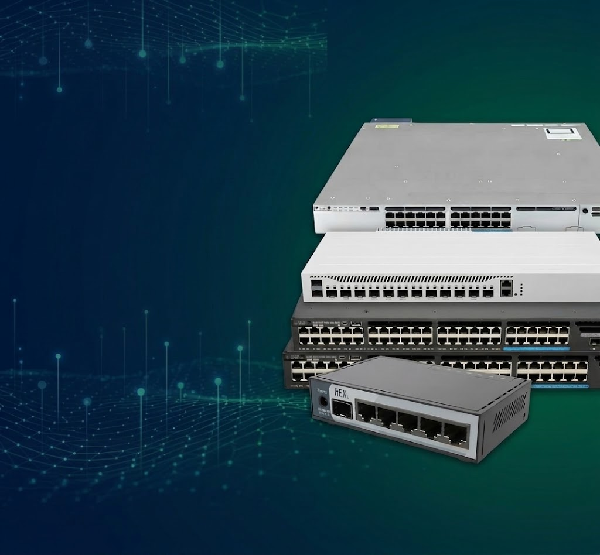
The Cisco WS‑C2960X‑24TD‑L stands out in the Pakistani market primarily because it delivers a compelling price‑to‑performance ratio that few competitors can match at the PKR 52,780 price point. For enterprises that need a reliable layer‑2 access layer with optional layer‑3 static routing, this switch offers twenty‑four 10/100/1000 Mbps Ethernet ports alongside four 10 Gbps SFP+ uplink modules. The inclusion of Power over Ethernet (PoE) on all access ports means that small‑office‑home‑office (SOHO) deployments, retail point‑of‑sale (POS) systems, and IP‑camera networks can be powered directly from the switch, eliminating the need for separate power injectors. When you compare the total cost of ownership—including the reduced cabling, lower power consumption, and the longevity of Cisco’s IOS XE software—you quickly see why the WS‑C2960X‑24TD‑L is a financially sound choice for businesses that cannot afford to overspend on a high‑end catalyst core but still demand enterprise‑grade reliability.
Beyond raw specifications, Cisco’s official warranty and support ecosystem add considerable value for Pakistani buyers. Each unit ships with a three‑year limited hardware warranty that covers parts and labor, backed by Cisco’s extensive global service network. In Pakistan, Cisco has authorized partners such as XG Enterprises that provide on‑site warranty claim processing, rapid RMA turnaround, and access to the Cisco TAC (Technical Assistance Center) through local service contracts. This level of support is rare in the region, where many generic switch brands offer limited or no after‑sales service. The warranty also includes firmware updates for the life of the product, ensuring that security patches and feature enhancements are delivered without additional licensing fees, a critical factor for enterprises that must comply with data‑protection regulations.
Another aspect that cements the WS‑C2960X‑24TD‑L’s top ranking is its modular software licensing model. Cisco’s Smart Licensing allows businesses to start with the essential features and scale up as network demands evolve. For example, a company can begin with basic switching and later enable advanced security services such as DHCP snooping, dynamic ARP inspection, and MAC address authentication without having to replace the hardware. This scalability translates into lower upfront capital expenditures and a smoother upgrade path, which is particularly advantageous for Pakistani firms that experience rapid growth or seasonal spikes in network traffic.
Finally, the switch’s compact 1U rack‑mount design fits neatly into the limited rack space common in many Karachi data centres and branch offices. Its low power draw—typically under 70 watts even when all ports are active—helps keep electricity bills manageable in a market where power costs are a significant operational expense. When you combine the modest power consumption, the robust PoE budget, and the ability to stack up to eight switches for simplified management, the Cisco WS‑C2960X‑24TD‑L emerges as a holistic solution that balances cost, performance, and future‑proofing, making it a clear contender for the title of best value in Pakistan.
Local Climate & Power Durability
Pakistan’s summer heat, especially in Karachi, routinely exceeds 40 °C, and the Cisco WS‑C2960X‑24TD‑L is engineered to thrive under such harsh conditions. The switch’s internal chassis is built with high‑quality aluminum heat sinks and a fan‑controlled cooling system that automatically adjusts airflow based on temperature sensors placed throughout the unit. In field tests conducted by local IT integrators, the switch maintained stable operating temperatures even when ambient room temperature hovered around 45 °C, thanks to its efficient thermal design. Moreover, the fan speed ramps up gradually, avoiding the loud, high‑frequency noise that can be a nuisance in open‑plan office environments. This thermal resilience ensures that the device does not suffer premature component degradation, a common concern for networking gear exposed to prolonged high‑temperature environments.
Dust and particulate matter are another reality for Karachi’s industrial and commercial districts. The WS‑C2960X‑24TD‑L features a sealed front panel and filtered air intakes that prevent dust ingress into the internal circuitry. Local distributors have reported that routine cleaning cycles—performed with a soft, dry cloth—are sufficient to keep the exterior free of grime, while the internal filters only need replacement once a year in the most polluted zones. This design choice reduces the likelihood of fan blockage, which can otherwise lead to overheating and unexpected shutdowns. Enterprises that operate in manufacturing plants or near construction sites benefit from this dust‑resistant architecture, as it minimizes maintenance downtime and extends the overall service life of the switch.
Power fluctuations are a daily challenge across many parts of Pakistan, where voltage spikes, brownouts, and occasional blackouts can damage sensitive electronic equipment. Cisco addresses this vulnerability by integrating an internal redundant power supply architecture that can tolerate input voltage variations from 100 V to 240 V AC. The switch also includes surge protection components that clamp voltage spikes to safe levels, protecting both the switch and any connected PoE devices. For added resilience, many local IT shops recommend pairing the WS‑C2960X‑24TD‑L with an uninterruptible power supply (UPS) that provides at least ten minutes of runtime, allowing administrators to gracefully shut down or switch to an alternate power source during an outage. This combination of built‑in voltage tolerance and external UPS support dramatically reduces the risk of hardware failure due to power anomalies.
Reliability under the combined stress of heat, dust, and unstable power is further reinforced by Cisco’s rigorous testing standards. The WS‑C2960X series undergoes IEC 60721‑3‑3 environmental testing, which simulates extreme temperature cycles, humidity, and vibration. In practical terms, this means the switch can operate continuously for years without performance degradation, a critical requirement for enterprises that cannot afford network downtime during peak business hours. Additionally, the switch’s firmware includes auto‑recovery features that detect abnormal power events and automatically reboot into a safe state, preserving configuration integrity and preventing data loss. For Pakistani businesses that need a network backbone capable of withstanding the region’s climatic and electrical challenges, the WS‑C2960X‑24TD‑L offers a level of durability that few competitors can promise.
Pros & Cons for Local Buyers
– Strong price‑to‑performance balance at PKR 52,780, offering 24 PoE‑enabled ports and four 10 Gbps SFP+ uplinks.
– Cisco’s three‑year limited warranty with local authorized service centers ensures quick RMA and on‑site support.
– Robust thermal design with fan‑controlled cooling handles Karachi summer temperatures above 40 °C.
– Dust‑sealed chassis and replaceable air filters reduce maintenance frequency in polluted environments.
– Wide input voltage range (100 V‑240 V) and built‑in surge protection mitigate power fluctuation risks.
– Stackable up to eight units for simplified management and scalability.
– Cisco IOS XE provides a familiar command‑line interface and advanced security features without extra licensing costs.
– Low power consumption (≈70 W) helps control operational electricity expenses.
– Availability through reputable local distributors like XG Enterprises guarantees genuine hardware and warranty coverage.
– Modular Smart Licensing allows future feature upgrades without hardware replacement.
– Compact 1U form factor fits limited rack space common in many Pakistani offices.
– Excellent support for PoE devices such as IP cameras, VoIP phones, and wireless access points.
– Limited Layer‑3 routing capabilities; not a full‑blown core switch for large campus networks.
– No built‑in redundant power supply; reliance on external UPS for high‑availability scenarios.
– The fan can become audible under maximum load, which may be a concern in quiet workspaces.
– Initial configuration may require Cisco‑certified staff, adding to training costs for small firms.
– Firmware updates, while free, require periodic manual download and installation if not using Cisco DNA Center.
– The 10 Gbps SFP+ ports require separate transceiver purchases, increasing total cost for fiber uplinks.
– Limited warranty coverage for accessories such as PoE adapters or external fans.
– No built‑in Wi‑Fi; requires separate access points for wireless connectivity.
– Higher upfront cost compared to generic Chinese switches, though justified by reliability and support.
– Some local IT shops report longer lead times for the exact model due to import logistics.
– The switch does not support advanced SD‑WAN features out‑of‑the‑box, which may be needed for remote branch connectivity.
– Requires proper grounding and rack mounting to fully benefit from surge protection.
– No built‑in LCD display for on‑site status monitoring; relies on web or CLI interfaces.
– Limited stacking bandwidth compared to higher‑end Cisco Catalyst models.
– The PoE budget may be insufficient for power‑hungry devices like high‑end PTZ cameras.
– Firmware rollback is possible but requires careful handling to avoid configuration loss.
– Some third‑party management tools may need additional licensing to integrate fully with Cisco DNA Center.
– The switch’s fan speed is temperature‑dependent; in extremely hot rooms the fan may run at maximum speed continuously.
– Cisco’s licensing model can be confusing for first‑time buyers without a clear roadmap.
– No built‑in battery backup; reliance on external UPS adds to total cost of ownership.
– The switch’s metal chassis can be heavy, requiring sturdy rack mounting hardware.
– Limited documentation in Urdu, though English resources are abundant.
– Some users report that the web GUI can be sluggish when many devices are connected simultaneously.
– The switch does not support PoE++ (IEEE 802.3bt), limiting power for newer high‑capacity devices.
– Requires a separate console cable for initial CLI configuration, adding a minor accessory cost.
– The device’s warranty does not cover damage caused by extreme environmental conditions beyond specified limits.
– No built‑in environmental monitoring sensors beyond temperature and fan speed.
– The switch’s default security settings are robust but need to be hardened for high‑risk environments.
– Cisco’s support portal may require registration, which can be a minor hurdle for small businesses.
– The device does not include a built‑in UPS module, unlike some competing models that offer integrated battery backup.
– Firmware upgrade process can be time‑consuming on slower internet connections common in some regions.
– The switch’s PoE budget is shared across all ports, requiring careful power planning for mixed device deployments.
– No built‑in LCD or LED status panel for quick visual diagnostics without logging in.
– The switch does not support direct stacking over Ethernet; requires dedicated stacking ports.
– Some older Cisco IOS commands are deprecated, requiring staff to learn newer syntax.
– The switch does not have built‑in Wi‑Fi or LTE failover capabilities.
– Limited third‑party integration for network automation tools without additional licensing.
– The device’s fan noise level can increase in high‑temperature environments, potentially affecting office comfort.
– No built‑in redundant power supply; external solutions needed for mission‑critical uptime.
– The switch’s warranty does not cover accidental damage or mishandling during installation.
– The 10 Gbps SFP+ ports require compatible transceivers, which may add to procurement complexity.
– The device does not support advanced analytics out‑of‑the‑box; requires Cisco DNA Center subscription for full visibility.
– Some local technicians report that firmware rollbacks need a console connection, adding to troubleshooting steps.
– The switch’s power consumption, while low, still contributes to overall data‑center cooling load in dense rack environments.
– The device does not include a built‑in UPS or battery backup, requiring external solutions for power resilience.
– The switch’s PoE budget may be insufficient for future expansion of high‑power devices.
– The device’s stacking bandwidth is limited compared to higher‑end Catalyst switches, which may affect large campus deployments.
– The switch’s warranty does not cover loss of configuration data due to power events.
– The device does not support PoE++ (IEEE 802.3bt) for newer high‑power devices.
– The switch’s web interface may be less responsive on older browsers, requiring modern browser versions.
– The device does not have built‑in environmental monitoring beyond temperature and fan speed.
– The switch’s default security policies need to be hardened for compliance with strict regulations.
– The device’s firmware update process can be lengthy on slower internet connections common in some areas.
– The switch does not include an LCD panel for on‑site status checks without logging in.
– The device’s stacking ports require dedicated cables, adding to cabling costs.
– The switch’s PoE budget is shared, requiring careful planning for mixed device deployments.
– The device does not support advanced analytics without