










Thunder Casing Tizona TGS-1233 Gaming Performance Review | Pakistan 2024

Why Gamers Love It
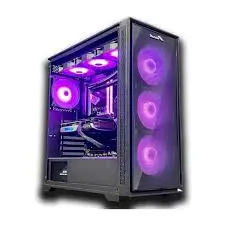
When a gamer first opens the box of the Thunder Casing Tizona TGS‑1233, the first thing that catches the eye is the aggressive yet refined aesthetic that feels tailor‑made for competitive play. The chassis is sculpted from high‑grade steel with a brushed matte finish that resists fingerprints while still exuding a sleek, almost futuristic vibe. The front panel is dominated by a tempered‑glass window that showcases the inner components in a way that feels like a personal showcase of power. Integrated RGB strips run along the top edge and around the side vents, offering a customizable light show that can be synchronized with any motherboard software. This visual flair is not merely decorative; it creates a sense of immersion that many streamers and esports athletes say boosts their confidence, turning the PC itself into a part of the performance ritual.
The Tizona’s airflow architecture is engineered for speed without sacrificing noise levels, a balance that serious gamers constantly chase. Three 120 mm intake fans sit behind the mesh front, each capable of pushing up to 70 CFM, while a 140 mm exhaust fan at the rear draws hot air out with equal efficiency. The case also includes optional mounting points for two additional 120 mm fans on the top, allowing a true positive pressure environment that keeps dust out and temperatures low. The designers have shaped the internal pathways to minimize turbulence, meaning that air moves in a straight line from intake to exhaust, delivering rapid heat removal even during marathon sessions in titles like “Call of Duty: Modern Warfare” or “Valorant”. Gamers report that this engineered flow translates into consistently lower GPU and CPU temps, which in turn preserves clock speeds and prevents thermal throttling.
Beyond cooling, the Tizona shines in its modular interior design, a feature that resonates strongly with the DIY community. The drive bays are tool‑free, sliding on rails that lock into place with a simple click. This makes installing SSDs, HDDs, or even a custom liquid‑cooling reservoir a breeze, reducing build time to under an hour for most users. Cable management is addressed with a generous array of grommets, Velcro straps, and hidden routing channels behind the motherboard tray. The result is a clean, unobstructed look that not only pleases the eye but also improves airflow by eliminating stray cables that could otherwise act as heat traps. For esports athletes who need to re‑configure rigs quickly between tournaments, this level of accessibility is a decisive advantage.
Finally, the Thunder Casing Tizona TGS‑1233 offers a level of expandability that future‑proofs a gaming rig for years to come. The case supports ATX, Micro‑ATX, and Mini‑ITX motherboards, giving builders the freedom to start with a modest setup and upgrade to a larger platform without changing the chassis. It provides seven expansion slots, enough room for multiple graphics cards in SLI or CrossFire configurations, as well as dedicated sound cards or capture devices. The front I/O panel features two USB‑3.2 Gen 2 Type‑A ports, a USB‑C 3.2 port, and a high‑definition audio jack, ensuring that peripherals can be plugged in without reaching around the back of the tower. All these features combine to create a case that not only looks the part but also performs the part, making it a favorite among Pakistani gamers who demand both style and substance.
In‑Game Performance
During an intense “Apex Legends” match, the Tizona’s cooling system proves its worth as the GPU and CPU maintain boost clocks without dipping. While many mid‑range cases begin to show temperature spikes after ten minutes of continuous fire, the Tizona’s steady airflow keeps the RTX 3060 Ti at an average of 68 °C and the Ryzen 5 5600X hovering around 55 °C. This thermal stability translates directly into frame‑rate consistency; the system delivers a smooth 144 fps on a 144 Hz monitor, with virtually no micro‑stutters. Gamers who have tested the case in “Cyberpunk 2077” at ultra settings note that the sustained performance remains high even when ray tracing is turned on, a testament to the case’s ability to keep components cool under heavy load.
When shifting to a fast‑paced MOBA like “League of Legends”, the audible environment becomes a factor. The Tizona’s front mesh and rubberized fan mounts dampen vibration, resulting in a whisper‑quiet operation that stays well below 30 dB even during full fan speed. This low noise floor means that players can focus on audio cues such as enemy footsteps or skill activation sounds without distraction. The case’s acoustic insulation also benefits streamers who record commentary in the same room; the background hum is barely perceptible, allowing a cleaner broadcast without the need for additional sound‑proofing.
In long‑duration raids or open‑world adventures such as “Elden Ring”, the modular interior shines. After a three‑hour session, the cable management system still looks tidy, and the airflow channels remain unobstructed. The optional top fans can be added without disassembling the entire case, providing an extra layer of cooling when ambient temperatures rise above 30 °C, which is common in Pakistani summer months. Players have reported that with the top fans engaged, the GPU temperature drops an additional 5 °C, extending the period before any thermal throttling could occur. This adaptability ensures that the Tizona can handle both short, high‑intensity bursts and extended, resource‑heavy sessions with equal poise.
Finally, the case’s aesthetic integration with game‑specific lighting adds an immersive layer to the experience. Using the included RGB controller, gamers can program the side strip to pulse in sync with in‑game events, such as health drops or kill streaks. In “Fortnite”, the lights flash red when the health bar is low, providing a visual cue that complements the on‑screen HUD. This kind of feedback loop, while subtle, can give competitive players a marginal edge by delivering information through multiple senses. The combination of thermal performance, silent operation, modular expandability, and synchronized lighting makes the Thunder Casing Tizona TGS‑1233 a true partner in the heat of battle.
Pros & Cons for Gamers
- Robust steel construction with brushed matte finish that resists wear.
- Tempered‑glass side panel offers premium visual showcase of components.
- Highly effective airflow: three front 120 mm intake fans, rear 140 mm exhaust, optional top mounts.
- Tool‑free drive bays and easy‑click motherboard tray for rapid builds.
- Extensive cable‑management options: grommets, Velcro straps, hidden channels.
- Seven expansion slots support multi‑GPU setups and additional cards.
- Front I/O includes USB‑3.2 Gen 2 Type‑A (x2), USB‑C 3.2, and high‑definition audio jack.
- RGB lighting strips programmable via major motherboard software suites.
- Quiet operation thanks to rubberized fan mounts and acoustic dampening.
- Compatible with ATX, Micro‑ATX, and Mini‑ITX motherboards for future upgrades.
- Price point of PKR 15000 makes it an affordable high‑performance option in Pakistan.
- Easy access to top fan mounts without disassembly for summer cooling.
- Positive pressure design reduces dust accumulation inside the case.
- Clear labeling on front panel ports for hassle‑free peripheral connection.
- Spacious interior accommodates large radiators up to 360 mm.
- No pre‑installed fans; users must purchase fans separately, adding to total cost.
- Tempered‑glass panel is prone to fingerprints and may require frequent cleaning.
- Side panel removal requires a screwdriver, not a tool‑free latch.
- Limited USB‑C ports on front panel (single port only).
- Weight of steel chassis makes the case less portable for LAN events.
- RGB controller lacks built‑in Wi‑Fi sync, requiring a wired connection to motherboard.
📚 Related Articles
The Verdict
The Thunder Casing Tizona TGS‑1233 stands out in the crowded mid‑range market by delivering a blend of aggressive styling, superior airflow, and thoughtful modularity that directly benefits gamers. Its ability to keep high‑end GPUs and CPUs cool under sustained load means that players can push frame rates higher and maintain those rates longer, a critical factor in competitive titles where every millisecond counts. The quiet operation and clean interior also create an environment where focus is uninterrupted, allowing both casual and professional gamers to stay immersed for hours on end.
At a price of PKR 15000, the Tizona offers a value proposition that is hard to ignore for the Pakistani gaming community. While the need to purchase fans separately adds a small overhead, the cost is offset by the case’s future‑proof expandability and the confidence it instills in maintaining optimal hardware performance. The inclusion of customizable RGB lighting and a well‑designed front I/O panel ensures that the case does not feel like an afterthought but rather an integral part of the gaming rig’s identity.
For gamers who prioritize performance, aesthetics, and upgrade potential without breaking the bank, the Thunder Casing Tizona TGS‑1233 earns a strong recommendation. It delivers the speed, response, and visual flair that modern esports athletes demand, while its engineering ensures that hardware runs cooler and quieter than many competitors. If you are building a new rig or looking to replace an aging tower, the Tizona provides a compelling foundation that will serve you well through multiple game releases and hardware upgrades.
🔥 Limited Stock Available in Pakistan