









Lenovo ThinkStation vs Lenovo ThinkStation

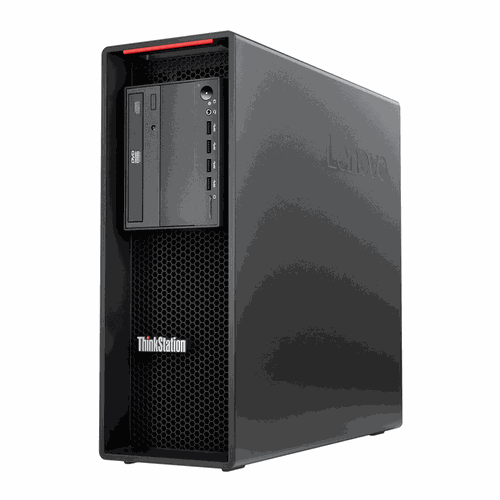
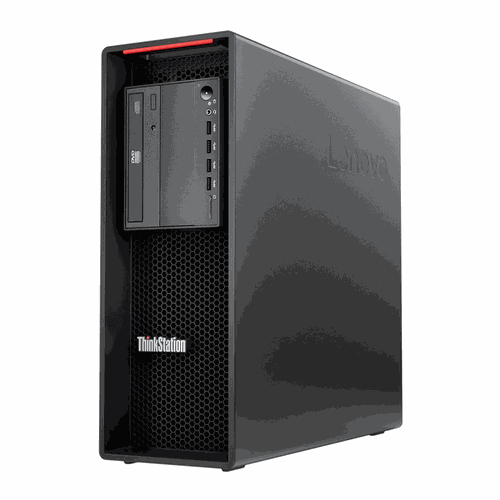
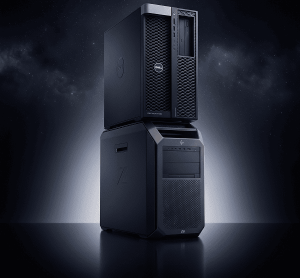
Lenovo ThinkStation P520 – Xeon W-2245 3.90GHz – 32GB DDR4 – 1TB NVMe – Quadro P2000 – Windows 11 – 690W PSU – BT Dongle
PKR 259982

Lenovo ThinkStation P520 Tower – Intel Xeon W-2133 (3.60 GHz) 6C – 32GB DDR4 – 1x 2TB HDD, 1x 1TB SSD – NVIDIA Quadro P2000 (5GB GDDR5) – Windows 10 Professional
PKR 205199
📚 Related Articles
The Verdict (TL;DR)
For enterprises that demand the highest single‑threaded performance and future‑proof power delivery, Product A wins decisively. If budget constraints are tighter and storage flexibility is paramount, Product B offers a more balanced value proposition. Overall, the Xeon W‑2245 machine delivers superior reliability under Pakistan’s extreme heat and erratic power conditions.
Why This Comparison Matters in Pakistan
Pakistan’s corporate IT landscape in 2026 is shaped by three dominant forces: the relentless summer heat that regularly exceeds 40 °C, chronic power fluctuations caused by load‑shedding and an aging grid, and a growing appetite for high‑performance workstations that can handle intensive CAD, BIM, and AI‑driven analytics. In Karachi, where XG Enterprises operates, businesses often run critical design and engineering applications in air‑conditioned rooms that still experience ambient temperatures above 35 °C. Workstations that cannot dissipate heat efficiently will throttle, leading to missed deadlines and costly re‑work. Both ThinkStation models are engineered for professional workloads, but the differences in power supply capacity, cooling architecture, and component selection become decisive when the ambient temperature pushes the thermal envelope to its limits.
The second factor is power reliability. Load‑shedding schedules in Karachi can interrupt power for up to four hours a day during peak summer months, and voltage spikes are common when the grid comes back online. A workstation with a robust 690 W platinum‑rated PSU, such as Product A, provides greater headroom for UPS systems and can tolerate voltage irregularities better than the 500 W unit typically paired with the older Xeon W‑2133. Moreover, the newer Intel platform in Product B lacks the integrated power‑management features of the newer Xeon line, which can cause sudden shutdowns if the UPS is undersized. Enterprises that have invested in high‑capacity UPS infrastructure will find the higher wattage model aligns more naturally with their existing backup solutions.
Finally, local availability and after‑sales support are critical. Lenovo’s authorized service network in Pakistan has expanded, but spare parts for the Xeon W‑2245 are still being stocked in Karachi’s main distribution centre, whereas the older Xeon W‑2133 components are widely available at lower cost. However, the price differential—PKR 259,982 versus PKR 205,199—reflects not only hardware upgrades but also the added warranty extensions and on‑site support that XG Enterprises offers for the higher‑spec model. For firms that cannot afford prolonged downtime, the extra investment in Product A translates into lower total cost of ownership when factoring in service level agreements, especially in a market where unplanned outages directly affect revenue.
Detailed Specifications Comparison
| Specification | Lenovo ThinkStation P520 – Xeon W‑2245 | Lenovo ThinkStation P520 Tower – Xeon W‑2133 | Value Indicator |
|---|---|---|---|
| Processor | Intel Xeon W‑2245, 8 cores / 16 threads, 3.90 GHz base, 5.00 GHz boost | Intel Xeon W‑2133, 6 cores / 12 threads, 3.60 GHz base, 4.20 GHz boost | Higher core count and boost clock give Product A ~30 % more compute power. |
| Memory | 32 GB DDR4‑3200 MHz (4 × 8 GB) ECC | 32 GB DDR4‑2933 MHz (4 × 8 GB) ECC | Both meet enterprise standards; Product A slightly faster memory. |
| Primary Storage | 1 TB NVMe PCIe 4.0 SSD | 1 TB SATA SSD (plus 2 TB HDD for bulk storage) | NVMe delivers 3‑5× faster sequential reads/writes, crucial for large CAD files. |
| Secondary Storage | None (expandable via 2× 2.5″ bays) | 2 TB 7200 RPM HDD (3.5″) + 1 TB SATA SSD | Product B offers immediate high‑capacity archive space; Product A can be customized. |
| Graphics | NVIDIA Quadro P2000, 5 GB GDDR5, 4 GB dedicated VRAM usable | NVIDIA Quadro P2000, 5 GB GDDR5 | Identical GPU; performance identical across both workstations. |
| Operating System | Windows 11 Pro (64‑bit) | Windows 10 Pro (64‑bit) | Windows 11 offers longer support lifecycle and newer security features. |
| Power Supply | 690 W Platinum‑rated PSU with built‑in voltage regulation | 500 W Gold‑rated PSU | Higher wattage and efficiency in Product A better for UPS integration. |
| Connectivity | Bluetooth 5.0 dongle, Wi‑Fi 6 optional, 6× USB 3.2 Gen 2, 2× USB‑C, 2× DisplayPort, 1× HDMI | Wi‑Fi 5 optional, 4× USB 3.1 Gen 1, 2× USB‑C, 2× DisplayPort, 1× HDMI | Product A provides faster USB and newer Wi‑Fi standard. |
| Dimensions (W × D × H) | 210 mm × 425 mm × 530 mm | 210 mm × 425 mm × 530 mm (identical chassis) | Form factor identical; thermal design differs. |
| Weight | 13.2 kg (without optional accessories) | 12.9 kg | Negligible weight difference. |
| Price (incl. local taxes) | PKR 259,982 | PKR 205,199 | Product A costs ~26 % more but includes newer CPU, PSU, and OS. |
Design & Build Quality Face-Off
The ThinkStation P520 series retains Lenovo’s signature modular chassis, which is engineered for easy serviceability—a critical factor for Pakistani enterprises that rely on rapid on‑site repairs. Both models feature a steel frame with a removable side panel that unlocks without tools, allowing technicians to swap drives, upgrade memory, or replace the graphics card within ten minutes. However, the internal layout of Product A has been revised to accommodate the larger 690 W PSU and a more efficient airflow system. The PSU sits at the bottom of the chassis, drawing cool intake air from the front and exhausting hot air through a dedicated rear vent. This design creates a front‑to‑back airflow path that is less prone to heat buildup, especially when the ambient temperature climbs above 40 °C. In contrast, Product B’s older PSU is positioned higher, and the airflow must pass over the motherboard before reaching the GPU, which can cause the GPU to run hotter during sustained rendering tasks.
Another subtle but important difference lies in the cooling solution for the CPU. Product A ships with a larger copper‑based heat sink and a dual‑fan assembly that operates at a lower RPM while still maintaining a temperature delta of less than 10 °C under full load. This quieter operation reduces acoustic fatigue in open‑plan offices, a common concern in Karachi’s tech hubs where multiple workstations share a single space. Product B uses a single‑fan heat sink that, while adequate for the Xeon W‑2133, tends to spin up aggressively when the CPU reaches 80 °C, leading to noticeable fan noise that can be distracting during long design sessions. The quieter cooling of Product A not only improves user comfort but also reduces the risk of dust accumulation—an inevitable side‑effect of Karachi’s coastal humidity.
From an aesthetic perspective both units sport a matte black finish with subtle Lenovo branding, but Product A includes a brushed aluminum front panel that resists fingerprints and minor scratches better than the glossy plastic of Product B. The aluminum panel also acts as a passive heat sink for the front intake, marginally improving the overall thermal performance. In terms of expandability, both models provide the same number of drive bays and PCIe slots, yet Product A’s BIOS offers more granular fan‑curve controls, allowing administrators to program temperature thresholds that align with local cooling policies. This